Run your portfolio with confidence
See how RentCheck gives you visibility across every property and proof when it matters.
Try RentCheck Free
14 day trial. No credit card required.



Sam and Amanda Beutler’s journey into property management began long before they established Apex Property Management in Boise, Idaho. What started as a shared curiosity for real estate when they met in college evolved through renovating properties and becoming landlords and investors themselves.
For nearly a decade, Amanda managed a small portfolio of about 35 doors out of Google’s suite of tools. She built Google Docs and Sheets to update owner clients each month, took property photos with a cell phone or digital camera, and stored them in Dropbox. Sharing what an inspection turned up meant sharing folders and juggling (sometimes multiple) email threads just to get everyone aligned. It was tedious and incredibly time-consuming.
In 2017, the Beutlers purchased an established property management company and its larger portfolio. Amanda, who owns systems, process design, service, and strategy, oversaw the management company while Sam continued flipping and building homes through the couple’s investing company. In 2021, Sam joined Amanda as her full-time partner, and they sold their interest in the other business to put all of their eggs in one basket.
When the Beutlers later looked to other property management companies to manage some of their own properties out of town and out of state, they noticed those teams were in the same boat: disconnected tactics with no real basis for collaboration or growth. Amanda kept coming back to the same conclusion: “...there simply has to be a better way.”
Their experiences on both sides of the property management relationship shaped their understanding of what it means to care for an investment property. But building a company capable of delivering that care consistently would prove to be an evolution of its own.
“For years, we were truly doing the best we could with the tools, resources, and knowledge we had at the time. We had no idea what the true cost of working reactively was.
We looked at our capacity, our processes, and the possibilities so differently back then. We were dealing with every case, scenario, and situation as a standalone experience, and we had no idea how much we would gain by streamlining our approach.”
As the Beutlers scaled their business and the number of units in their portfolio, they realized they “...felt so disconnected from what was really going on” at their properties. They craved transparency in the management lifecycle: for them, their residents, and their owners.
Even before 2017, Amanda’s team did its best to document inspections across their smaller portfolio. But they were still at the mercy of whoever had onboarded a property or resident, and team members and business partners didn’t always do things the same way. After purchasing the larger portfolio, the problem became impossible to ignore: they regularly discovered inspections that were nonexistent, poorly documented, or simply incomplete.
The cost showed up most painfully at move-out. With little or nothing to work from, the team had to coordinate a turnover while trying to reconcile security deposits fairly. Sometimes that meant telling owners that certain damages couldn’t be charged to residents because there wasn’t documentation to justify it.
“We would get to the point of reconciling security deposits after residents moved out and be on pins and needles. When we realized we had little or nothing to work with, it was so costly emotionally, physically, and mentally for our team... We recognized that we knew better, and therefore had to do better.”
The mental burden of tracking all that disconnected information was heavy, and it meant missing patterns across properties they had managed for years. So Apex rebuilt from the bottom up, starting with how they documented property condition.
For years, Apex employees took photos on their phones and stored them in Dropbox. In 2019, the team adopted [a dedicated inspection platform — decide whether to name], which Amanda calls a massive step up. But its technical back end, and the fact that residents couldn’t use it at the time, kept it an in-house tool. Meanwhile, residents completed move-in and move-out inspections using a Jotform template.
Amanda wanted something more collaborative, and in 2022 Apex brought on RentCheck.
“I truly wanted to allow the residents to be able to steward the care of properties alongside us in a meaningful way, all while saving my team copious time and effort.”
RentCheck gave Apex consistent, detailed property condition documentation. But the Beutlers learned that documentation is only one piece of the puzzle. What makes it actionable is having consistent processes for reviewing that information, recognizing what needs attention, and following through. Apex’s processes and team accountability evolved considerably right alongside the technology.
Resident-led inspections have become an incredibly valuable part of how Apex operates. Their value isn’t that they replace the team’s own inspections. It’s that they engage residents in documenting property conditions throughout the life of a tenancy, creating consistent visibility into what’s happening between the times Apex’s team is physically at the property.
Sam still walks properties himself before a resident moves in, documenting everything from the main water shut-off and appliance serial numbers to the furnace filter size and roof condition, and the team completes team-led inspections routinely and as needed. Between those visits, residents use RentCheck’s mobile app to document condition at move-in, mid-lease, move-out, and during routine inspections.
“We can ask tenants to be specific on what exactly they want to see, and we can take detailed pictures, delineate notes right there in the inspection.”
What happens next stays firmly with Apex’s team. When a resident completes an inspection in RentCheck, the team reviews the submission for completeness and for anything that needs attention. From there, they decide the appropriate next step: directing the resident to submit a maintenance request through Property Meld, addressing a lease compliance concern, or simply approving the inspection.
Approved inspection reports sync to AppFolio through the RentCheck integration, and a team member then shares them with the owner through AppFolio’s Owner Portal.
“The reports syndicate to AppFolio, and then we share through the owner’s portal, which is also incredibly powerful because everything goes through the portal... they go there for their source.”
Each platform plays an important role, but there’s a very intentional human element in how Apex connects the information and follows through.
Boise is a destination town, with hiking, mountain biking, fishing, and boating in the summer and skiing in the winter, all a short drive away. That draws property owners from all over the world. From wherever they call home, those owners are entrusting Apex with the care of their investment, and checking on it in person often isn’t realistic.
Consistent, detailed property condition documentation is how Apex keeps those owners informed and confident about what’s happening at their property, even when they can’t be there.
“Regular property condition photos from tenants allow us to sell it with confidence to owners that are out of state, even out of country. We’ve got owners that I’ve never met, that we’ve managed for 10-plus years now, and they don’t feel the need to check on their investment property.”
Recurring inspections do more than capture a moment in time. Over the years, they’ve given Apex a documented history of every property, which lets the team look back at conditions over time, revisit previous observations, and recognize patterns.
“We’re not just sharing photographs with homeowners; we’re able to recognize patterns, revisit previous observations, and have much more informed conversations about maintenance and future investments. That has changed our relationships with homeowners drastically.”
That history is what lets Apex be proactive about the big-picture items, like foundation concerns, roof repairs, and A/C replacements, that owners will eventually face. With years of property condition and maintenance information captured in RentCheck and Property Meld and shared through AppFolio, the team can flag these concerns well ahead of time and help owners plan for capital improvements. Sam points out that as Apex takes on more clients and properties, being proactive matters more than ever, and it has earned them trust among their long-tenured clients.
“It’s not a hard pill for them to swallow because they see it coming down the pipe long before, and we’re switching the narrative from being reactive to proactive.”
RentCheck features like asset capture help Apex gather property condition information far more efficiently as the team moves from one property to the next. The work hasn’t disappeared. Instead, Apex has been able to shift more of its attention toward reviewing information, recognizing concerns, coordinating next steps, and ensuring follow-through. That’s where the value of these tools and partnerships really shines.
Each tool in Apex’s stack has a clear job: AppFolio handles rentals and owner and resident communication through its portals, Property Meld handles maintenance, and RentCheck handles property condition documentation. Here’s how that comes together during a unit turnover:
A good maintenance process gets units rent-ready faster between turns and keeps good residents around by meeting their maintenance needs.
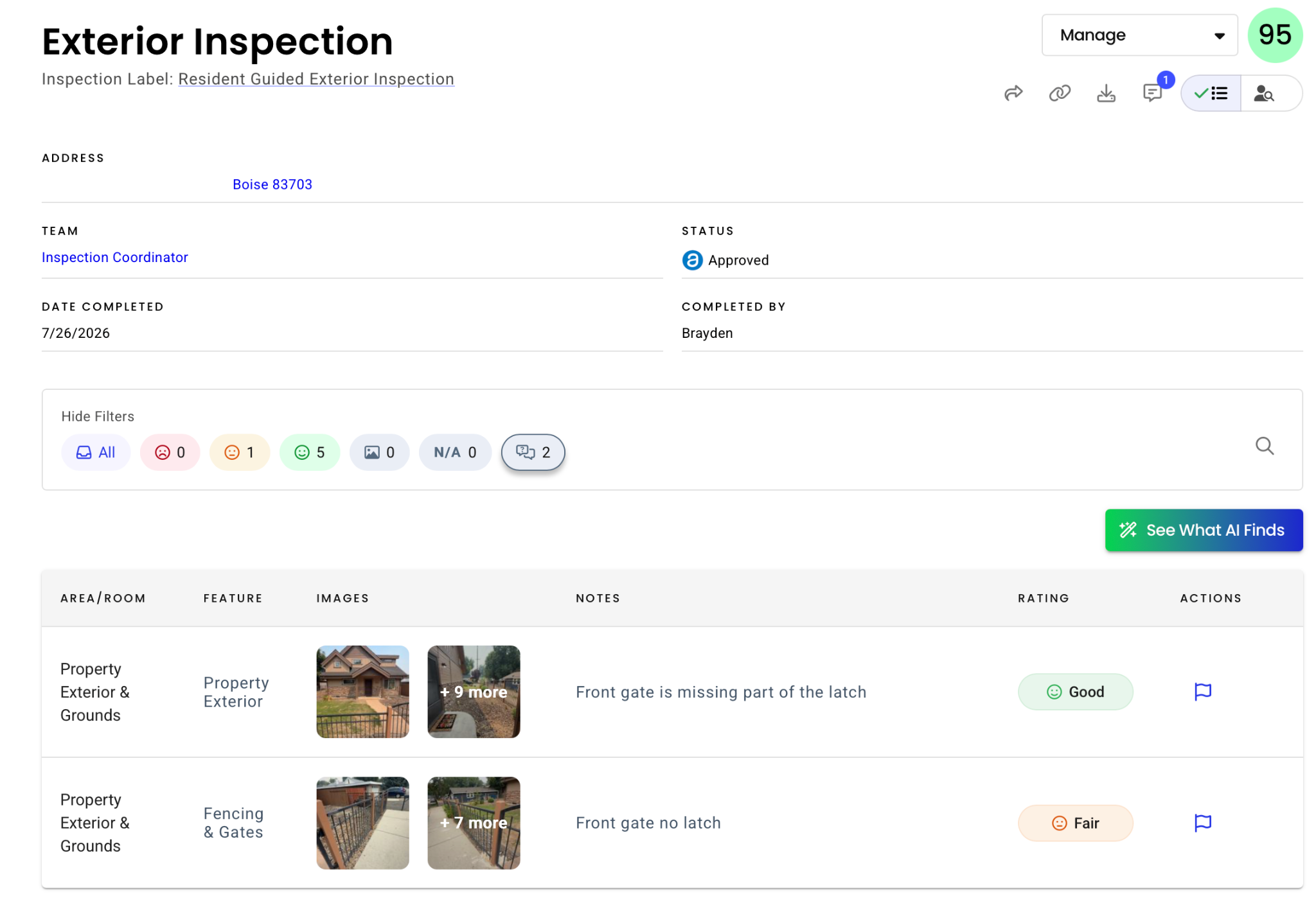
A resident-guided exterior inspection in RentCheck
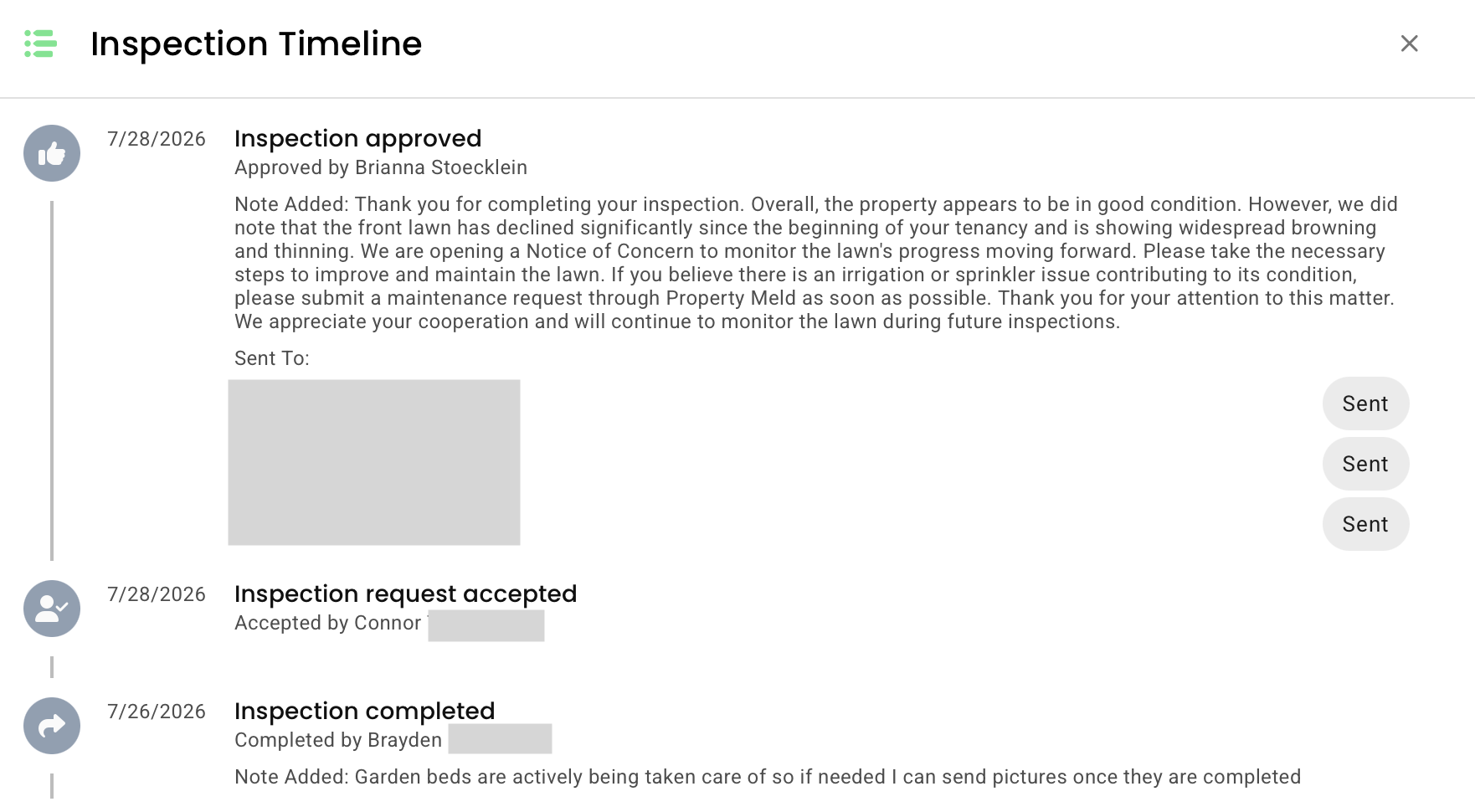
After reviewing a resident’s inspection, Apex’s team approves it with a note directing next steps through Property Meld
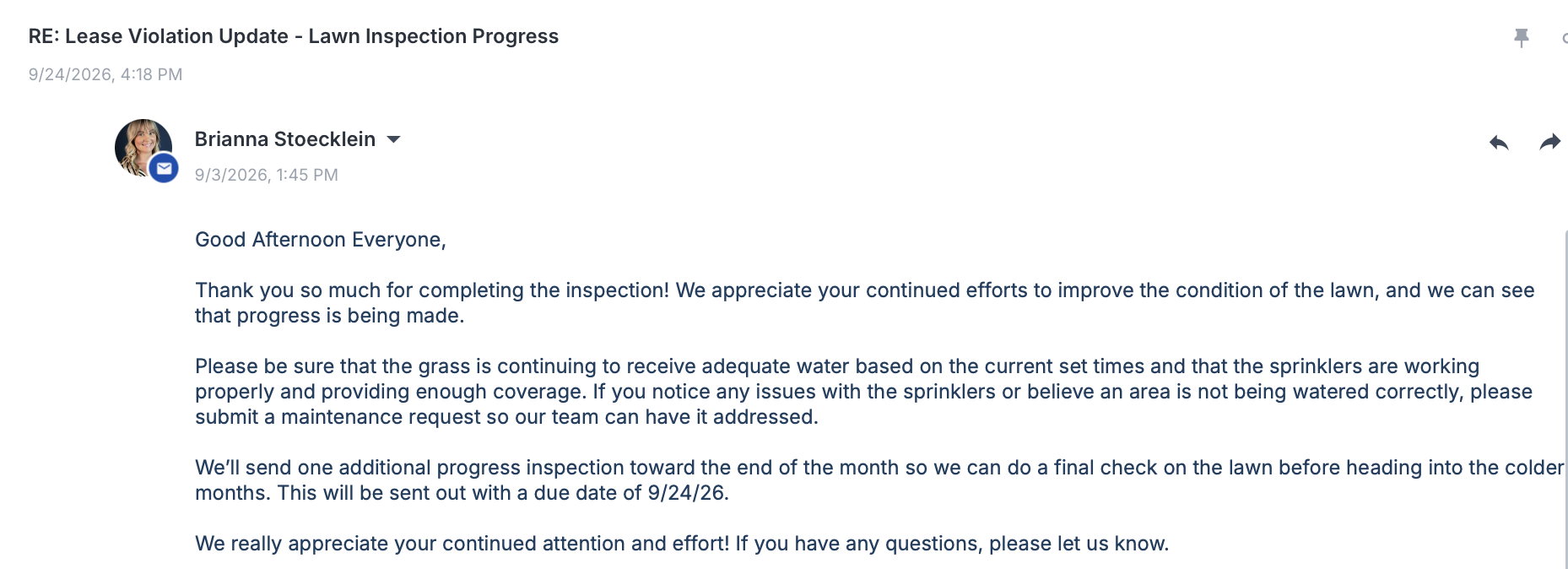
Following up on a lease compliance concern identified during an inspection
RentCheck + AppFolio: Completed inspection reports sync into AppFolio, where Apex’s team shares them with owners through the Owner Portal.
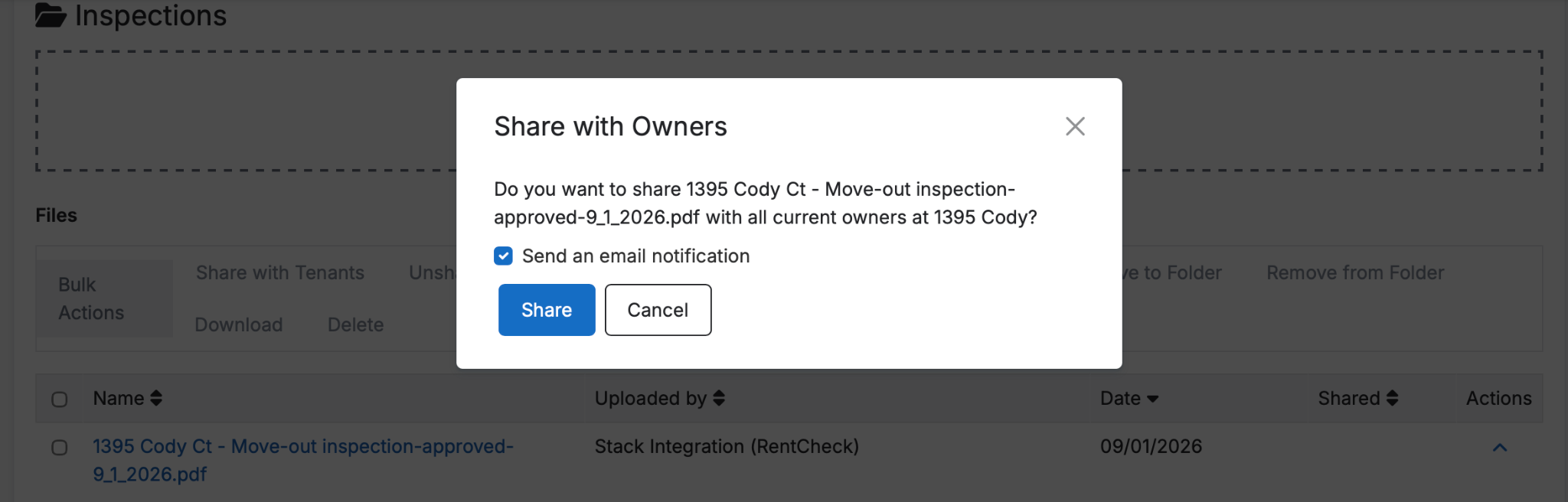
Sharing a synced RentCheck inspection report with owners in AppFolio
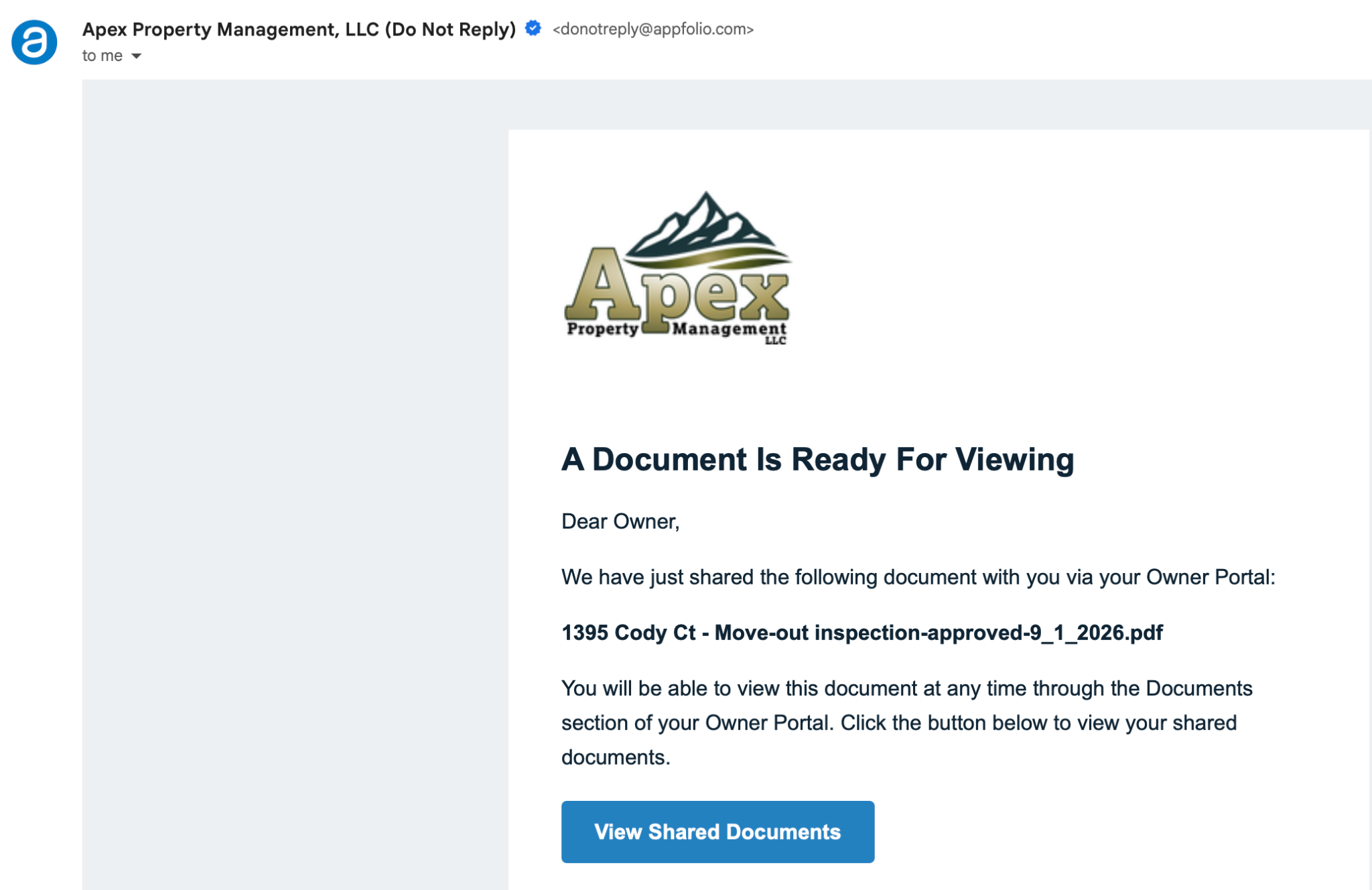
The owner’s notification that a new inspection report is ready to view
RentCheck + Property Meld: Apex built much of its maintenance process by hand before the RentCheck and Property Meld integration launched. Previously, creating a Meld from RentCheck meant flagging issues during or after an inspection (whether it was completed by a resident, a team member in the field, or a third party), then exporting those flags, images, and notes to manually create Melds in Property Meld. Now, once flags are created in RentCheck, teams can create Melds in Property Meld directly. Each work order includes the notes and issue details, plus a link to all associated images for richer context for the vendor.
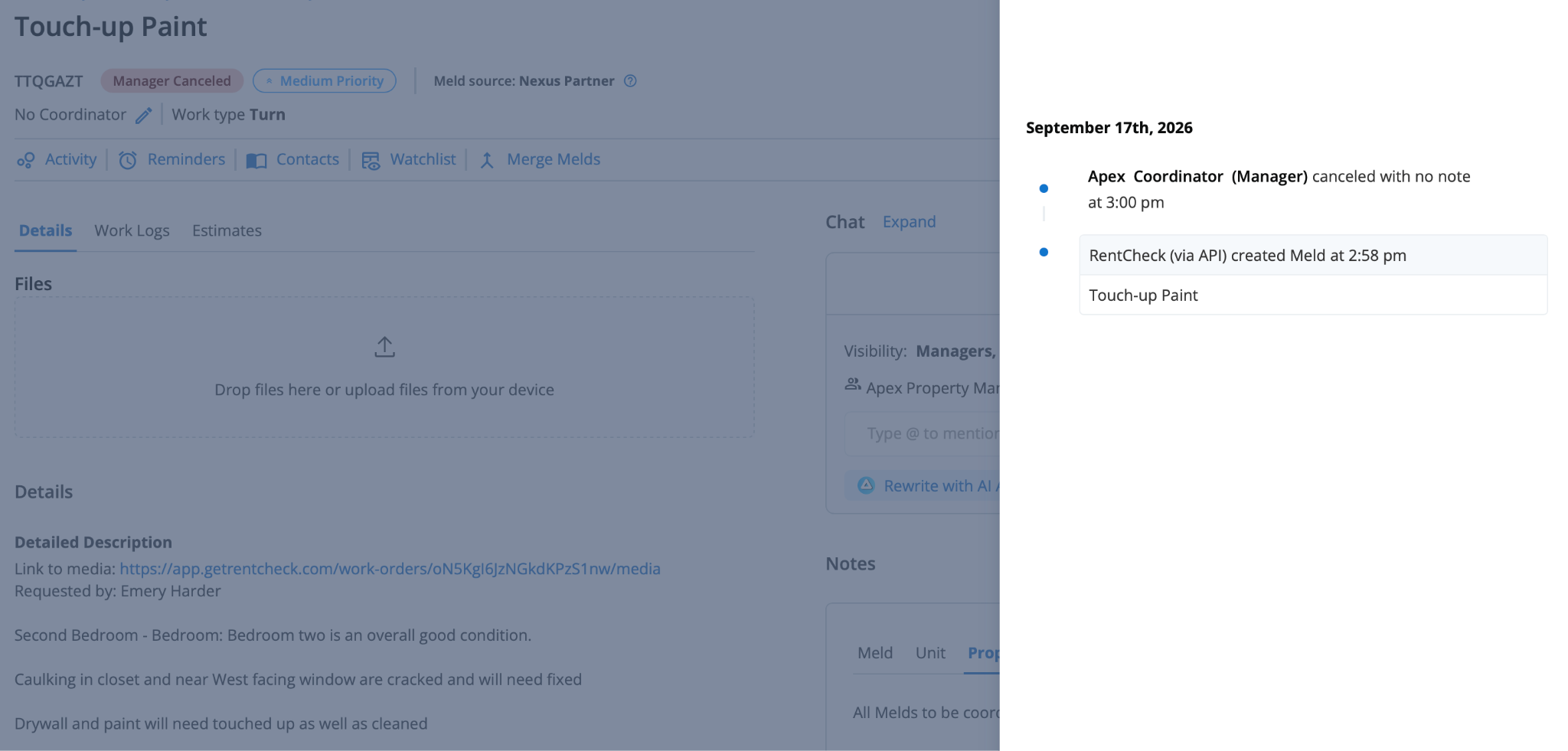
A Meld created in Property Meld from RentCheck via the integration
For teams that want an extra layer of review, RentCheck’s AI Damage Assist acts as a second set of eyes, reviewing submitted photos for critical issues like water, structural, electrical, and plumbing damage. When it detects damage, a flag can be created in one click, and a Meld can be created from that flag. Tools like these surface more for teams to investigate, but as Apex’s process shows, people still decide what happens next.
Resident-led inspections give property management teams visibility between visits without adding trips to the property. They can happen more often, they capture detail that maintenance teams or third-party vendors may miss (residents live there, after all), and residents have an incentive to be thorough: those who document a unit’s condition carefully protect their own security deposit, while sparse documentation gives them nothing to point to if damage is disputed later.
Apex’s workflow shows the kind of manual work property managers have had to build around when RentCheck and Property Meld weren’t directly connected: flagging issues in one platform, then recreating and re-documenting them by hand in another. With the new RentCheck and Property Meld integration, that translation step goes away. Flagged issues can be sent to Property Meld to create Melds directly, with the relevant details carried over, so teams like Apex’s can spend less time bridging systems and more time on the review, judgment, and follow-through that have become their calling card.
If you’re managing properties with Property Meld and want to see what a connected inspection and maintenance workflow looks like, view a demo of RentCheck to get started.
Resident-led inspections let property managers capture property condition throughout a tenancy, not just when staff are on site. With RentCheck, residents document conditions through a guided mobile app at move-in, mid-lease, move-out, and during routine inspections. The management team then reviews each submission for completeness and concerns and decides the next step. Resident-led inspections work alongside team-led inspections rather than replacing them, filling the gaps between visits with consistent, timestamped documentation.
Tenant-led inspection software puts part of the inspection process in the hands of the resident. Instead of relying only on staff visits, managers send residents a structured inspection through an app like RentCheck. The resident completes it on their own time, submitting photos and condition notes for each area of the property. The property manager then reviews the results, creating a consistent, documented record of property condition that reduces disputes, liability, and missed inspections.
RentCheck connects with AppFolio so completed inspection reports sync into the platform, keeping property data in one place. From there, teams can share reports with owners through AppFolio’s Owner Portal. Apex Property Management uses this workflow to give owners near and far a single, reliable place to see their property’s condition.
The RentCheck and Property Meld integration lets teams create Property Meld work orders (Melds) directly from issues flagged in a RentCheck inspection. Each Meld includes the notes and issue details, plus a link to the associated photos, so vendors know exactly what they’re walking into. This replaces the manual step of exporting flagged issues from one platform and recreating them by hand in the other.
Consistent property condition documentation is the foundation. Regular inspections give owners visibility into their investment without visiting in person. Over time, they also build a property history that helps managers spot patterns and plan ahead for capital improvements like roofs or HVAC replacements. Apex Property Management manages properties for owners across the country and overseas, some of whom haven’t needed to check on their investment in person in over a decade.


Farnsworth Realty and Management

Owner, All County Polk and All County Metro

Agent, Next Level Rentals & Realty

Property Manager, Iron Creek Properties

Keep better track of timing of inspections and compare previous inspections with ease!
See how RentCheck gives you visibility across every property and proof when it matters.
14 day trial. No credit card required.
Have tenants complete inspections on a schedule.
